Vedic astrology blog
Vimshottari dasha: your life in planet chapters.
Vimshottari dasha is the main timing clock of Vedic astrology. Nine planets take turns over 120 years, each one ruling a chapter of 6 to 20 years. Where you start depends on one thing: the nakshatra of your Moon at birth.
The nine periods, in order
Ketu 7 years, Venus 20, Sun 6, Moon 10, Mars 7, Rahu 18, Jupiter 16, Saturn 19, Mercury 17. Total: 120 years, the classic full human life. Nobody lives every chapter.
Where you start
Each of the 27 nakshatras belongs to one of the nine planets, in that same order, three times around the zodiac. You are born inside the period of your Moon's nakshatra lord, and part of it is already used: if the Moon has crossed 40% of its nakshatra, 40% of that period is gone.
AstroNum, the app
Your timeline. Calculated for you.
Profections, zodiacal releasing, your next big transit and your best windows ten years ahead, from your own birth chart. And your chart side by side with a partner or a friend.
Taylor Swift, worked out
Her Moon sits at 7°48' Gemini in the sidereal zodiac, in Ardra, a Rahu nakshatra. So she was born in Rahu's period, which ran out in June 2006.
Then came Jupiter, 16 years, from 2006 to 2022. Her first album came out in October 2006. Since 2022 she runs Saturn's 19 years. A timeline to check against a life, not a proof.
Oprah Winfrey, worked out
Her Moon is in Anuradha, a Saturn nakshatra, at 11°19' Scorpio. Her Venus period ran from 1985 to 2005, twenty years. The Oprah Winfrey Show went national in 1986.
How to read a period
A period is judged by what the planet rules in your chart, counted from your rising sign (lagna). Jupiter is not automatically good: for a Capricorn lagna it rules the 12th and the 3rd houses, and its period can test you.
Rahu periods often bring big material wins and a hunger that is never quite satisfied. Ketu periods often turn people inward, sometimes after a loss. Saturn slows things down and can put distance between you and others. Inside each period run sub-periods (antardasha), in the same order.
Why your birth time matters
The Moon moves about 13° a day, so about one nakshatra a day. One hour of birth time can move the start of every chapter by several months.
See your own Vedic chart
Your sidereal Moon, your nakshatra and your dashas, next to your Western chart.
Discover Vedic AstroKeep reading
New Moon in Sagittarius: 9 December 2026
The Titanic and the Sky of April 1912: Mercury Retrograde, Two Eclipses and the Warnings That Did Not Get Through
COVID-19 and the Sky of 2020: the Saturn-Pluto Conjunction, Mars in Capricorn and the Great Conjunction
AIDS and the Sky of 1981-1985: Saturn Stops on the Day of the First Report, Then Meets Pluto in Libra
Free class
Learn to read your birth chart yourself
Short visual lessons, 10 minutes a day, with a quiz at the end. Level 1 is free, no account needed.
This method, on your own 2027
Read about it here. Live it in your agenda.
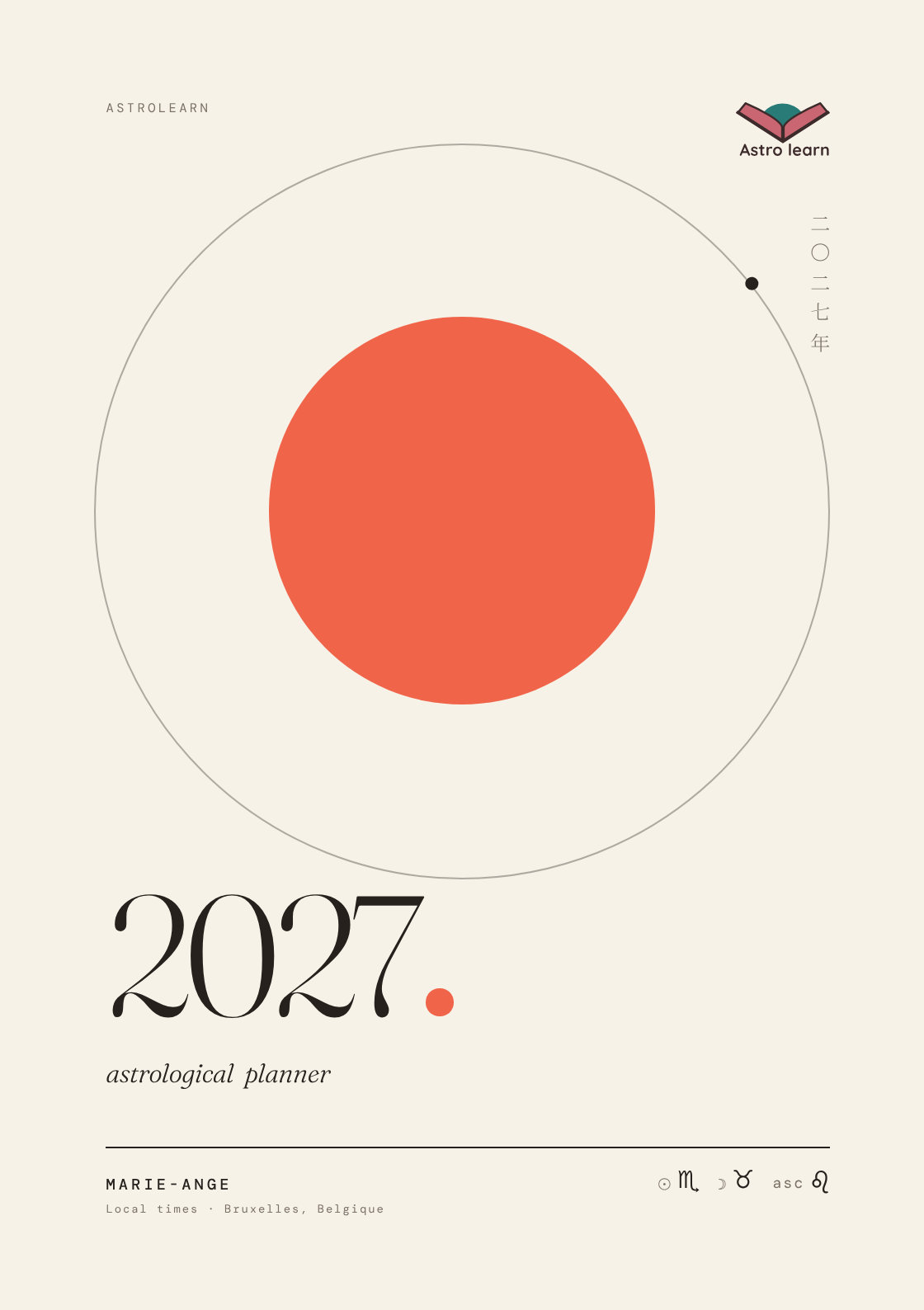
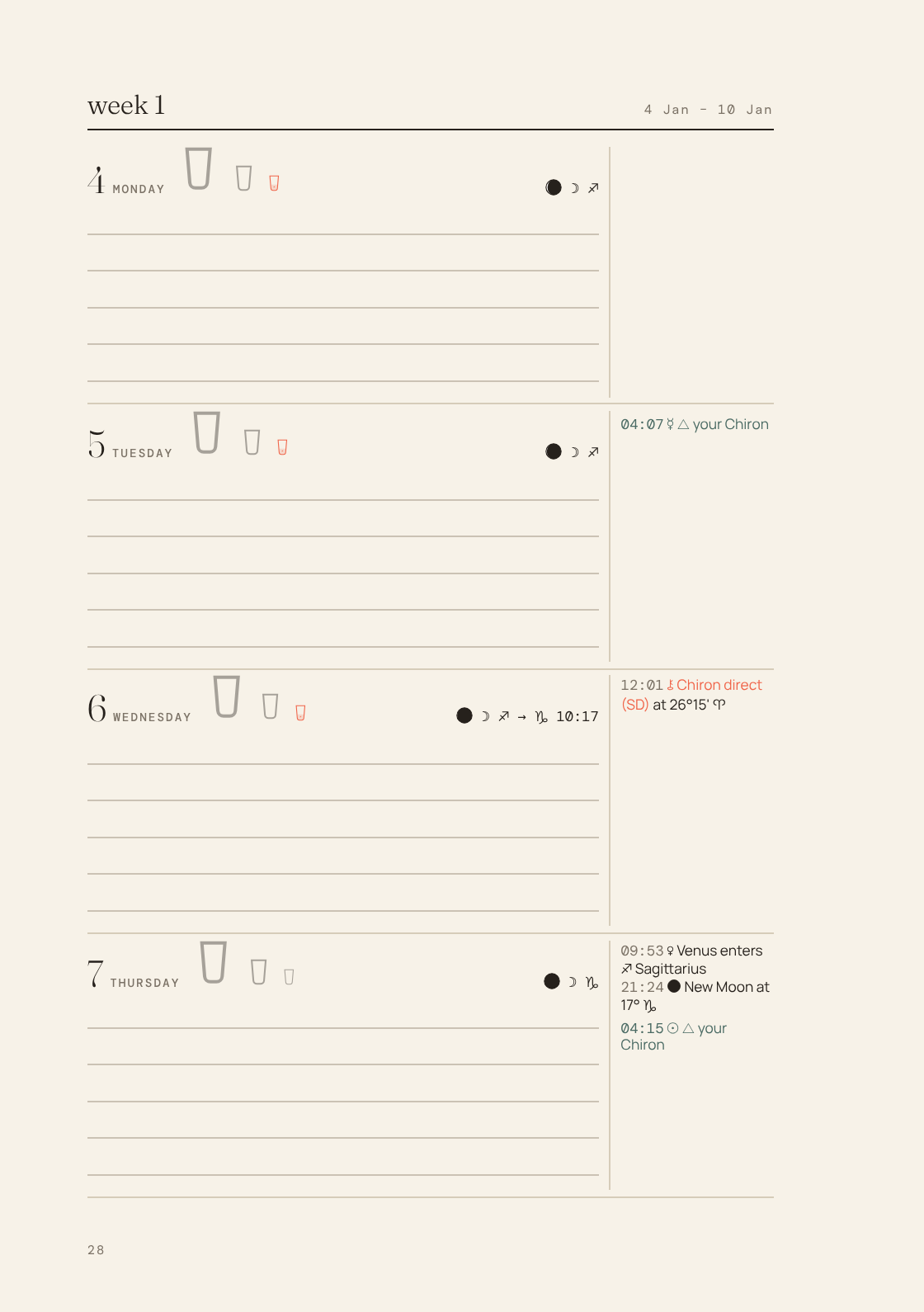
Your personalized 2027 agenda uses this kind of timing on your birth chart and writes the result day by day, in plain words. Your strong days, every Moon on the right day. A PDF to print, ready in one minute.
Questions
What is Vimshottari dasha?
The main timing system of Vedic astrology: nine planetary periods (Ketu, Venus, Sun, Moon, Mars, Rahu, Jupiter, Saturn, Mercury) that add up to 120 years. Your first period is set by your Moon's nakshatra at birth.
How is my dasha calculated?
Find your Moon's nakshatra in the sidereal zodiac. Its lord gives your first period. The share of the nakshatra the Moon still has to cross gives the share of that period left at birth. Then the periods follow in fixed order.
What is the difference between mahadasha and antardasha?
The mahadasha is the big chapter (6 to 20 years). The antardasha is a sub-period inside it, run by each of the nine planets in turn, from a few months to about three years.