
Electional Astrology: Choosing the Best Day to Start Something That Matters
You do not need a perfect date. You need a date that supports your goal and avoids the obvious problems. Scroll: the four-step checklist.
The four-step checklist
Scroll down, the cards slide by.
Step 1
Choose a rising sign, and make its ruler reasonably strong: it is the life of the moment.
Step 2
Make the Moon usable: not void of course, and heading to a good aspect.
Step 3
Strengthen the house of your goal: the 10th for a launch, the 7th for a wedding.
Step 4
Keep Mars and Saturn off the angles of the chart.
Try it on a real month
February 2027 through three simple filters.
February 2027
Only 7 and 8 February pass all three. Then you check the rising sign of the hour and your own chart. That is why astrologers plan launches months ahead.
A good election lands inside a good personal window.
Your turn: pick a date
- 1
Write your goal and the house that matches it.
- 2
Find your profection year: your age divided by 12, keep the remainder, add 1.
- 3
Inside your good months, run the four steps on a few dates and keep the best one, not a perfect one.
Your 2027 agenda already marks your best days, from your own chart.
The full guide
In short
Electional astrology is the practice of choosing a start time for an event, whether that is a business launch, wedding, contract signing, or move, so the astrological chart of that moment supports the goal. A practical election prioritizes four elements: a functional Ascendant with a strong chart ruler, a usable Moon that is not void-of-course, benefic emphasis on the house matching the goal, and no severe afflictions to the angles. The election works best when it lands inside a supportive personal timing window.
Most people fail at electional astrology because they are chasing a 'perfect' chart that does not exist. You do not need perfection. You need a chart that supports your goal and avoids obvious problems. Think of it as checking the weather before a road trip: you cannot control the sky, but you can choose to leave on a clear day instead of driving straight into a storm.
This guide gives you a practical checklist that works for most elections, from business launches to weddings to moving days. No perfectionism required.
What electional astrology actually is
Electional astrology is the practice of selecting a start time for an event so the chart of that moment supports the intended outcome. You are choosing conditions at the beginning, like planting a seed in the right season. This technique has been used for centuries for coronations, business launches, marriages, and military campaigns. If it sounds like something only royalty would bother with, consider this: Ronald Reagan's White House relied on an astrologer to time important announcements, press conferences, and even travel schedules throughout his presidency.
You choose the start
The chart of that moment supports the goal.
Like planting a seed
In the right season.
Not a guarantee
Better starting conditions. Your preparation still counts.
What electional astrology is not: a guarantee of success. It improves starting conditions. The result still depends on your preparation, your effort, and your broader timing cycles. An election with a strong chart ruler and functional Moon gives the event better initial momentum, but it cannot replace good strategy or override strongly adverse personal timing. Think of it as stacking the deck in your favor, not rigging the game.
The four-step checklist (works for almost everything)
Step one: choose a rising sign and make the ruler of the Ascendant reasonably strong. The Ascendant and its ruler are the 'life' of the election. If the chart ruler is weak or severely afflicted, the election typically underperforms no matter how good the rest of the chart looks. Look for the chart ruler in a sign of dignity, in a supportive house, and forming helpful aspects. This is the single most important factor.
- 1A strong ruler of the Ascendant: the life of the election.
- 2A usable Moon: not void of course, applying to a helpful planet.
- 3Strengthen the house of your goal: 10 career, 7 marriage, 4 home, 2 money.
- 4No Mars or Saturn sitting on the angles.
Step two: make the Moon usable. Avoid void-of-course periods (when the Moon makes no more aspects before changing signs), avoid the Moon in severe debility, and aim for supportive applying aspects, especially to the chart ruler or the planet ruling the goal house. The Moon is the co-significator of every election. A bad Moon can undermine an otherwise excellent chart.
Step three: emphasize the house that matches your goal. For a career launch, strengthen the 10th house. For a partnership or marriage, strengthen the 7th house. For a home purchase or move, strengthen the 4th house. For a financial venture, strengthen the 2nd house. Place benefic planets (Jupiter, Venus) in or aspecting the goal house when possible.
Step four: avoid heavy afflictions to the angles (Ascendant, Midheaven, Descendant, IC). Malefic planets like Mars or Saturn sitting right on the angles can introduce friction, delays, or obstacles at the start. This matters most for big, long-lasting beginnings like business incorporations or weddings.
Combining your election with your natal timing
An election works best when it lands inside a supportive personal timing window. If your profection year activates the same house as your election's goal, for example a 7th house profection year for a wedding, the election gets a natural boost from your own timing cycle. Similarly, a benefic transit to your chart ruler during the election period strengthens the outcome.
Your launch date: your own cycle and the chart of the day pull the same way.
If the election is strong but your personal timing is harsh (a difficult Saturn transit, a challenging profection), the event can still succeed but may cost more effort or encounter more resistance than you expected. The ideal is alignment between the electional chart and your natal timing. In practice, you work with the best available window and compensate where you can.
A simple example: you want to launch your online shop and you are in a 10th house profection year, the house of career. Jupiter crosses your chart ruler in spring. Pick a spring date when the Moon applies to Jupiter or Venus and the ruler of that day's Ascendant is well placed. Your personal cycle and the chart of the day pull in the same direction.
Electional astrology for weddings: what to prioritize
Weddings are one of the most popular uses of electional astrology, and for good reason. You are choosing a birth chart for your marriage, so the stakes feel high. The good news is that the checklist is the same, just with a specific focus on the 7th house.
- No Mars or Saturn on the angles (houses 1, 4, 7, 10).
- 7The 7th house of partnership: its ruler well placed, with good aspects.
- ♀︎Venus visible and strong.
- ☽︎The Moon applying to Venus or Jupiter, not void of course.
For a wedding election, you want the ruler of the 7th house (partnerships) to be well-placed and making supportive aspects. Venus should ideally be visible and well-dignified, since Venus is the natural significator of love and partnership. The Moon should be applying to a benefic planet, especially Venus or Jupiter, and should not be void-of-course. Avoid Mars or Saturn on the angles if possible, and aim for the 7th house to receive supportive aspects.
One often overlooked factor: check both partners' natal charts against the electional chart. If the wedding date features a supportive transit to both people's chart rulers, the timing is aligned not just in the abstract but for the specific people getting married. That kind of dual alignment is the gold standard for wedding elections.
Common mistakes that trip people up
The number one mistake is waiting for perfection. There are always trade-offs in any electional chart. A chart with a strong Ascendant ruler and functional Moon but a minor affliction to the 6th house is probably good enough for a business launch. Do not sacrifice a strong chart ruler for a slightly better Moon placement. Prioritize the big-impact factors and accept minor imperfections.
1. Waiting for perfection
Keep the strong chart ruler, accept small flaws.
2. Forgetting your own timing
Check your transits and profection year first.
- ☿︎℞︎
3. Fearing Mercury retrograde too much
Alone, it is not a dealbreaker.
The second mistake is ignoring your personal timing entirely. An objectively 'good' electional chart that lands during your most challenging transit period will not perform as well as a slightly less ideal chart that lands during a supportive personal window. Always check your own transits and profection year before locking in the date.
The third mistake is overweighting Mercury retrograde. Yes, it is worth noting for contracts and launches. But if the Ascendant ruler, Moon, and goal house are all strong, Mercury retrograde alone is not a dealbreaker. Plenty of successful ventures have launched during retrograde periods. Focus your energy on the high-impact factors, not on the one piece of astrology that went viral on social media.
Keep reading: Timing techniques
Your 2027, from your birth chart
Want this for your own year?
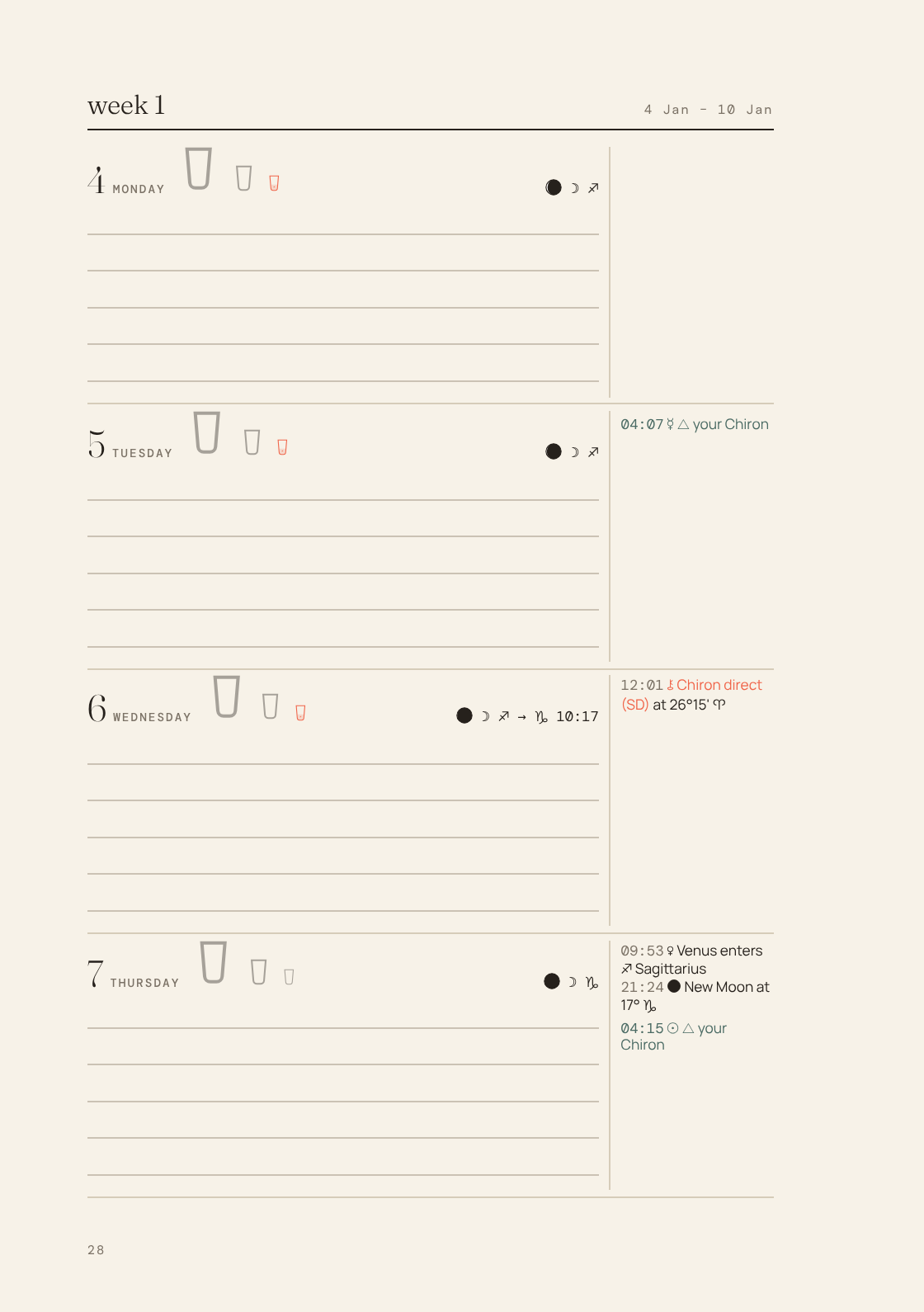
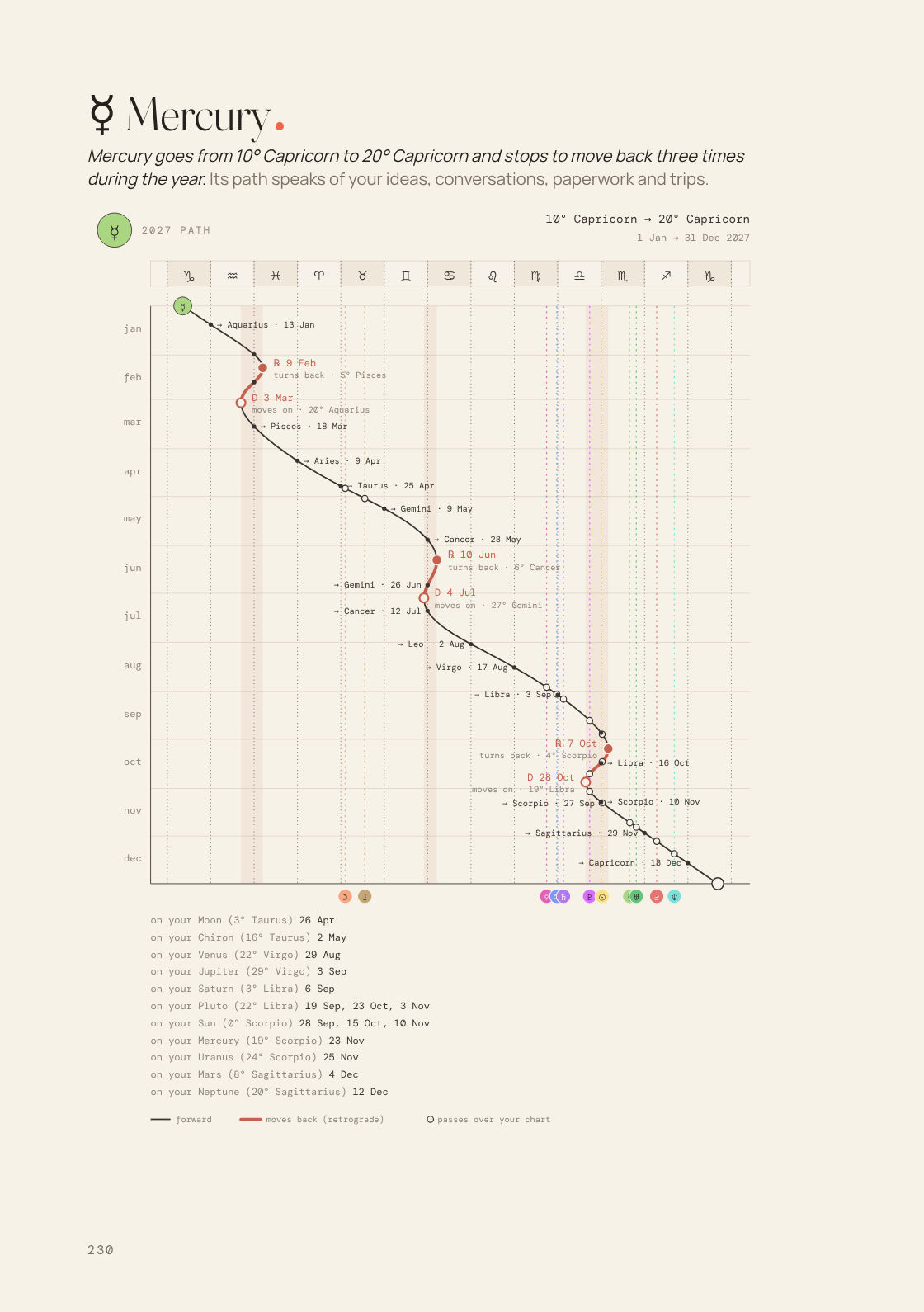
Your personalized 2027 agenda, day by day, from your birth chart: your strong days, the planets that cross your chart, every Moon already on the right day. A PDF to print, a lovely Christmas gift too.
Free class
Learn to read your birth chart yourself
Short visual lessons, 10 minutes a day, with a quiz at the end. Level 1 is free, no account needed.
Questions people ask
What is the best day to sign a contract in astrology?
In astrology, the best day to sign a contract is one where the Moon is not void-of-course and is moving toward a helpful planet, Mercury (the planet of contracts and paperwork) is in good shape, and the ruler of the rising sign at the time of signing is strong. Look at the 7th house for the other party and at the 3rd house for the documents themselves. If you can, avoid the Mercury retrograde weeks, but a strong Moon and a strong chart ruler matter more. Then check your own chart: a day that also brings a supportive transit to your chart ruler is the one to pick.
Can electional astrology guarantee success?
No. Electional astrology improves the starting conditions for an event. The result still depends on preparation, actions, context, and your broader timing cycles. Think of it as choosing the right season to plant rather than guaranteeing the harvest.
What is the single most important electional rule?
Treat the Ascendant and its ruler as the 'life' of the election. If the chart ruler is weak, debilitated, or severely afflicted, the election usually underperforms regardless of everything else. A strong chart ruler paired with a functional Moon covers most situations.
How do I choose between two possible dates?
Pick the date with a stronger chart ruler, a more functional Moon, and a cleaner emphasis on the goal house. Then confirm that date lands in a supportive natal transit or profection window. If both dates are comparable in the electional chart, your personal timing breaks the tie.
Does Mercury retrograde ruin an election?
Not automatically. Mercury retrograde correlates with communication and logistics hiccups, so it deserves extra caution for contracts and launches. But if the Ascendant ruler, Moon, and goal house are all strong, Mercury retrograde alone is not enough to reject an otherwise good election. Context matters more than any single factor.