Level 1
First steps
Never opened a chart? Start here. No jargon, just the map.

Level 1 free · 6 levels · 49 lessons
No jargon, no mysticism. Short visual lessons you can touch, a quiz after each one, and a path from your very first chart to the deepest timing techniques. Ten minutes a day is enough.
Level 1
Never opened a chart? Start here. No jargon, just the map.
Level 2
The planets, the signs and the twelve houses in depth: what each one means, who it describes, and why.
Level 3
Aspects, day and night, house rulers, a routine to read any chart, then love, career, temperament and health.
Level 4
Transits, returns, profections, lunations, eclipses and the nodes, and a plan for your year. Where astrology becomes a calendar.
Level 5
Dignities, triplicities, bounds and decans, aversion, help and harm, the Lots, closeness to the Sun and the fixed stars. Why two people with Venus in Leo live it so differently.
Level 6
Zodiacal releasing, progressions, circumambulations, firdaria and the three acts of a life. The deepest timing tools, made playable.
Course pass
Level 1 is free. The pass opens levels 2 to 6: from the alphabet of the chart to the deepest timing techniques, all hands-on.
Secure payment with Stripe
Every right answer on the first try counts. Climb the week, keep your streak, and see how far the community goes.
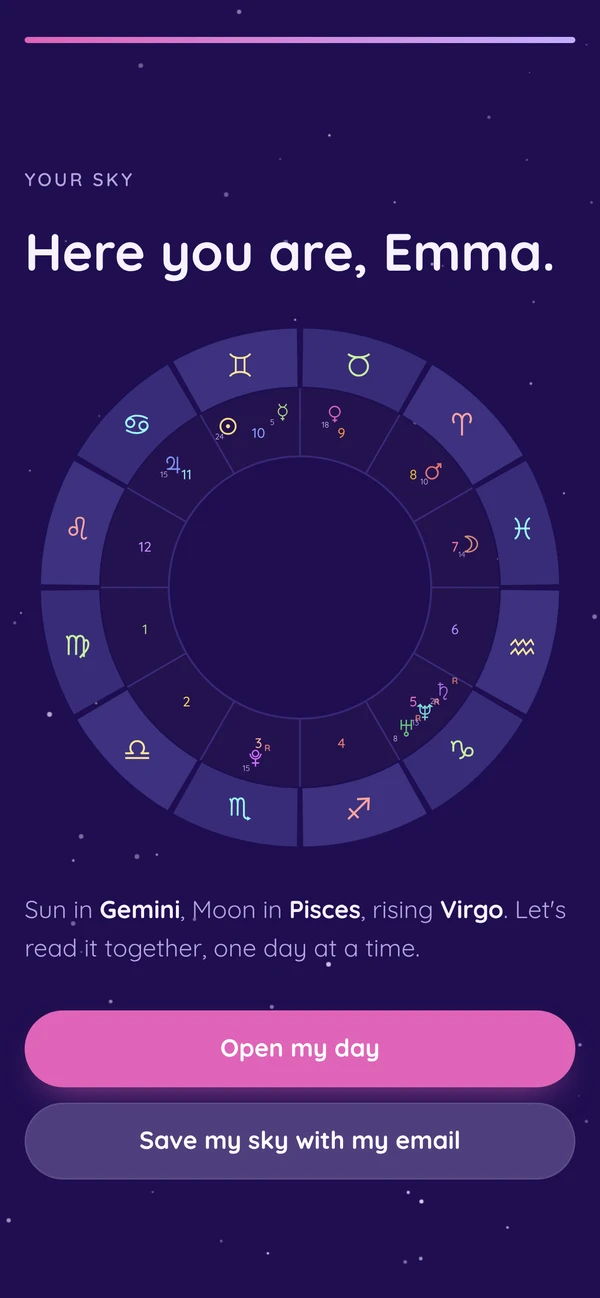
Everything you learn here is computed for you in the Astrolearn lab: your chart, hundreds of verified famous charts, transits, profections and peak periods. Free to try.
Learn astrology
Astrology looks endless. It is not. The whole language rests on 31 pieces: 7 traditional planets, 12 signs and 12 houses. Learn them on your own chart, then learn to read time, and you can already say useful things about a year. Here is the path I give my students, the same one the lessons above follow.
Do not start with a book of definitions. Start with your birth chart, because you know the story behind it. You need your date, time and place of birth.
Look at four things first: the Sun (what drives you), the Moon (what you need to feel safe), the rising sign (how you meet the world) and the chart ruler, the planet that rules your rising sign. These four already tell a coherent story.
Each house is an area of life: money, home, love, work, partner, career and so on. Use whole-sign houses to begin: the sign of your rising sign is the 1st house, the next sign is the 2nd, and so on. It is the oldest system and the easiest to learn.
A planet in a house brings its energy to that part of your life. Saturn in the 10th house reads very differently from Saturn in the 4th.
Planets in signs that face each other, or form a square, a trine or a sextile, are in a conversation. Some conversations are easy, some are tense. Learn the five main aspects and their angles: 0, 60, 90, 120 and 180 degrees. It is simple geometry.
Most people stop at the birth chart. The fun starts when you ask: when? Three techniques are enough to begin.
Transits show where the planets are today compared to your chart. Annual profections give the theme of each year of your life, counted from your birthday. Zodiacal releasing, a method from the 2nd century astrologer Vettius Valens, cuts a life into big chapters and peak periods. Used together, they turn a chart into a calendar.
This is my favourite part, because I am a numbers person. Do not believe a technique: test it. Take a date you know well, a wedding, a move, a new job, and look at what the techniques said at that moment. Then do it with famous people whose dates are public.
After twenty or thirty real cases you will feel which rules work for you. That is how astrology becomes a skill and not a belief.
Much of what is taught today about traditional timing comes from a small group of authors and translators. These are the voices I keep coming back to.
Astrolearn is independent and not affiliated with these authors or shows. They are listed because their work shaped how timing is taught today.
Yes. Start with your own chart, learn the 31 building blocks, then practise on real dates. A good teacher or a podcast speeds things up, but steady practice matters most.
A few weeks to read the basics of a birth chart, a few months to use timing techniques with confidence. Ten minutes a day on real charts beats one long weekend.
No. Software does the calculations. You only need to count signs and houses, and to understand a few angles.
For the rising sign and the houses, yes. Without it you can still work with the planets in signs and with the transits.
Annual profections. They need only your birth date and your rising sign, and they give the theme of each year. Then add transits, then zodiacal releasing.
The apps
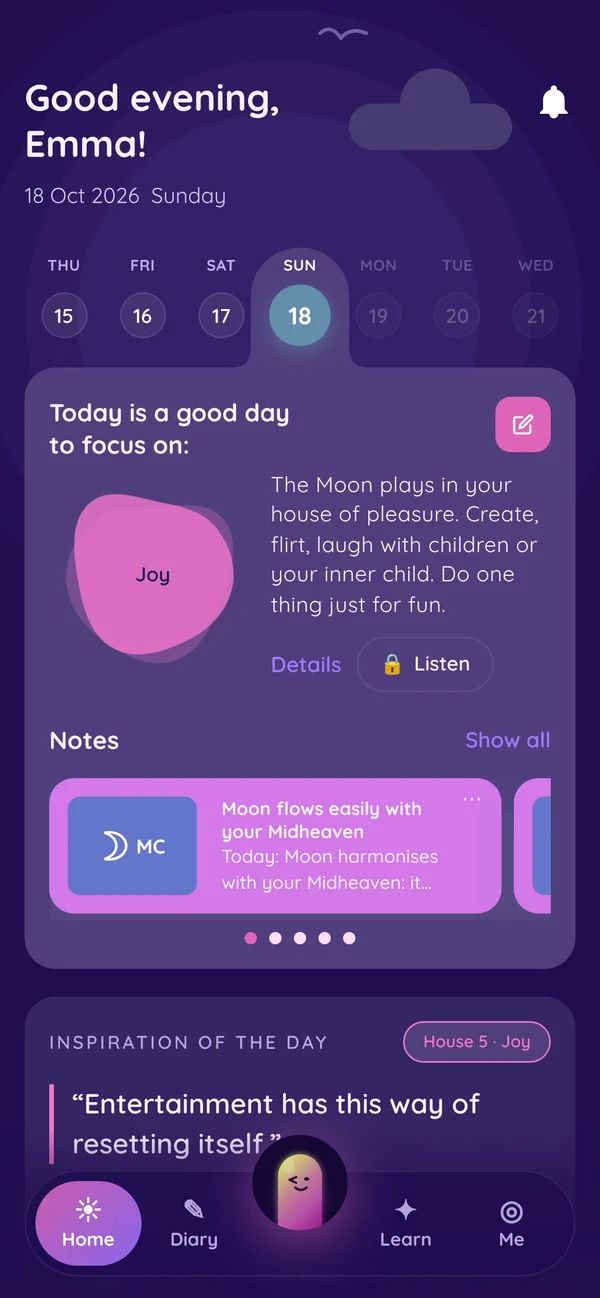
Know your best days before they arrive. Check them every morning, and practise on the lives of the stars.
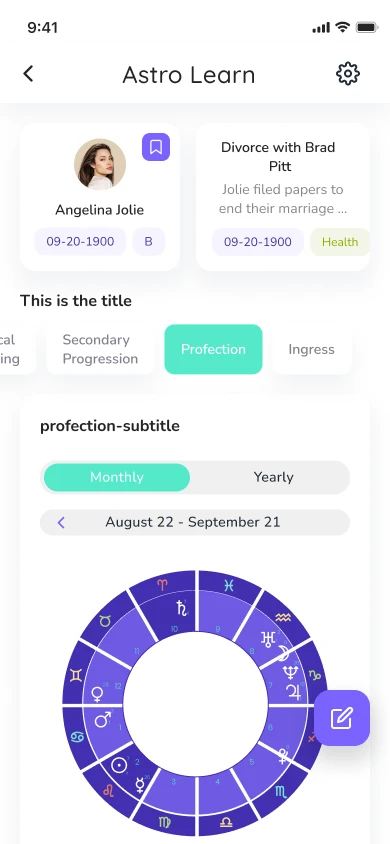
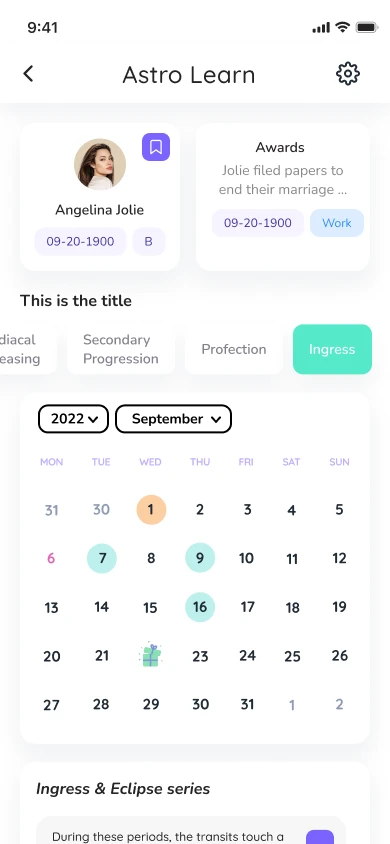
To learn timing
Zodiacal releasing, profections, progressions and full transit cycles. Practise on the lives of famous people, then on your own chart.
Or open it in your browser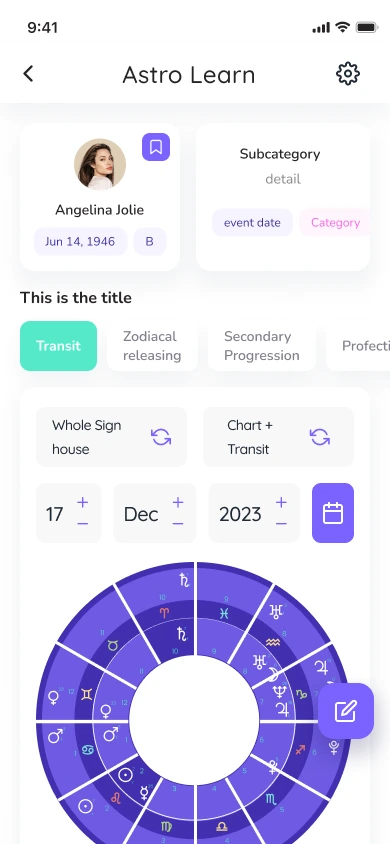

To live your dates
Your key dates, a daily guide and a reading of your personality. No astrology knowledge needed.